

Tech tools for beginners play a crucial role in helping new learners adapt to the digital world with confidence. Whether someone is entering technology for career growth, education, or personal interest, the right tools reduce complexity and make learning approachable.
Beginners often struggle not because technology is difficult, but because they start with tools that are too advanced or poorly suited to their needs.
This guide explores tech tools for beginners across everyday usage, learning, productivity, and creative work. It focuses on simplicity, accessibility, and practical value to support long-term growth.
Understanding Tech Tools for Beginners
Tech tools for beginners refer to software, hardware, and digital platforms designed for ease of use and low learning curves. These tools help users perform tasks, learn new skills, and build confidence without requiring deep technical expertise, making them especially useful as tech tools for learning at home.
Unlike professional tools built for advanced users, beginner tools prioritize intuitive design, guided learning, and flexibility. This makes them ideal for people just starting their tech journey.
Why Choosing the Right Tech Tools Matters
Starting with the wrong tools can discourage beginners and slow progress. Overly complex platforms often overwhelm new users, leading to frustration and abandonment.
Tech tools for beginners are designed to minimize friction. They allow users to focus on learning concepts rather than struggling with interfaces. Choosing the right tools builds momentum and encourages consistent practice.
Essential Everyday Tech Tools for Beginners
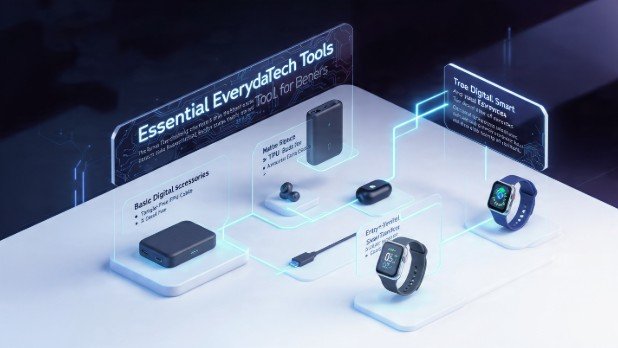
Everyday tech tools help beginners manage daily digital tasks while becoming comfortable with technology.
Basic Digital Accessories
Simple digital accessories support productivity without complexity. Power banks, universal charging cables, and wireless audio devices make everyday tech usage smoother. These tools help beginners stay connected and productive while learning basic device management.
Entry-Level Smart Devices
Smartwatches and fitness trackers introduce beginners to connected ecosystems. These devices offer simple interfaces and clear feedback, helping users understand notifications, data tracking, and device synchronization. Such tools provide a gentle introduction to modern digital systems.
Learning-Focused Tech Tools for Beginners

Learning tools are the foundation of growth for beginners entering technology-related fields.
Beginner-Friendly Code Editors
Simple code editors allow beginners to write and test code without advanced configuration.
Editors with extensions, syntax highlighting, and error feedback support learning and experimentation, including guidance on Code extensions that improve productivity and understanding. Tech tools for beginners in coding focus on clarity and ease of use rather than complexity.
Online Learning Platforms
Online platforms offer structured lessons, examples, and interactive exercises. These platforms help beginners learn web development, programming, and data concepts at their own pace. They are essential tech tools for beginners who prefer guided learning environments.
Hands-On Learning Kits
Educational kits introduce beginners to electronics and logic through physical interaction. These kits combine hardware and software learning in a practical way. Hands-on tools help reinforce concepts and build problem-solving skills.
Productivity Tech Tools for Beginners
Productivity tools help beginners organize their learning, projects, and daily tasks.
Note-Taking and Organization Tools
Digital note-taking platforms allow beginners to store ideas, learning notes, and references in one place. These tools help structure information and track progress. Organized workflows reduce cognitive load and improve focus.
Task and Project Management Tools
Simple project management tools help beginners break tasks into manageable steps. Visual boards and checklists provide clarity and motivation. These tech tools for beginners support goal setting and accountability.
Creative and Design Tech Tools for Beginners
Creativity plays an important role in digital learning. Beginner-friendly design tools enable users to create visuals without technical expertise.
Design platforms with templates and drag-and-drop features allow beginners to focus on ideas rather than technical execution. These tools support content creation, presentations, and personal projects.
Writing and Communication Tools for Beginners
Clear communication is essential in the digital world. Writing tools help beginners improve clarity, grammar, and tone. These tools support emails, documentation, and content creation, making them valuable tech tools for beginners in any field.
AI-Based Tech Tools for Beginners

Artificial intelligence tools assist beginners by providing explanations, suggestions, and learning support.
AI-powered assistants help users understand concepts, brainstorm ideas, and solve problems quickly. These tools reduce learning barriers and provide instant feedback. For beginners, AI tools act as supportive learning companions rather than replacements for practice.
How Tech Tools for Beginners Support Skill Development
Tech tools for beginners accelerate learning by offering structure and feedback. They help users experiment safely, make mistakes, and learn from them. Consistent use of beginner-friendly tools builds confidence and technical literacy over time.
Avoiding Common Mistakes When Choosing Tech Tools
Beginners often choose tools based on popularity rather than suitability. Advanced tools may seem attractive but can slow progress. It is better to start with simple tools that match current skill levels and gradually transition to advanced platforms.
The Importance of Consistency in Using Tech Tools for Beginners
The Importance of Consistency is key when working with tech tools for beginners. Regular practice builds familiarity and reduces hesitation. Inconsistent usage leads to forgotten workflows and slower progress. Consistency turns tools into habits and habits into skills.
Adapting Tech Tools as Skills Grow
As beginners gain experience, their needs change. Tools that once felt sufficient may become limiting. Gradual upgrades allow learners to transition smoothly without losing confidence. The goal is evolution, not sudden replacement.
Future Outlook for Tech Tools for Beginners
Tech tools for beginners continue to evolve with advancements in the artificial intelligence, along with improvements in user experience design. Future tools will become more adaptive, personalized, and intuitive. As technology becomes more accessible, beginners will have more opportunities to learn and grow without steep barriers.
Frequently Asked Questions
1. What are tech tools for beginners?
Tech tools for beginners are simple digital tools designed to help new users learn, work, and create without advanced technical knowledge.
2. Why are beginner-friendly tools important?
They reduce complexity, improve confidence, and support gradual skill development.
3. Can beginners use professional tools?
Beginners can use professional tools, but simpler alternatives are often more effective during early learning stages.
4. How many tech tools should a beginner start with?
Starting with a small set of essential tools is recommended to avoid overwhelm.
5. Do tech tools replace learning and practice?
No, tools support learning, but consistent practice is essential for growth.
Starting Strong in the Digital World
Tech tools for beginners form the foundation of a successful digital learning journey. From everyday accessories to learning platforms and productivity software, the right tools simplify complex processes and build confidence.
By selecting appropriate tech tools for beginners, practicing consistently, and adapting tools as skills grow, learners can create sustainable progress and long-term success in the digital world.