
Python is one of the most popular and beginner-friendly programming languages in the world. Learning Python provides doors to a variety of industries, including web development, data analysis, automation, and more, regardless of your level of experience or desire to transition into the tech industry.
This blog will guide you through how to learn programming language Python step-by-step, offering practical tips and resources to help you on your learning journey.
Why Learn Python? The Benefits for Beginners
Python isn’t just popular — it’s versatile, readable, and widely used in real-world applications. Here’s why Python is a great choice for beginners:
- Ease of Learning: Python’s syntax is clear and simple, making it ideal for beginners.
- Wide Use: Python is used in various fields, from web development and data science to automation and artificial intelligence.
- Large Community: The Python community is vast and supportive, with countless resources, tutorials, and forums available to help you.
- In-Demand Skills: Python skills are highly sought after in tech jobs, making it a great language to learn if you want to enter the job market.
Step-By-Step Guide to Learning Python
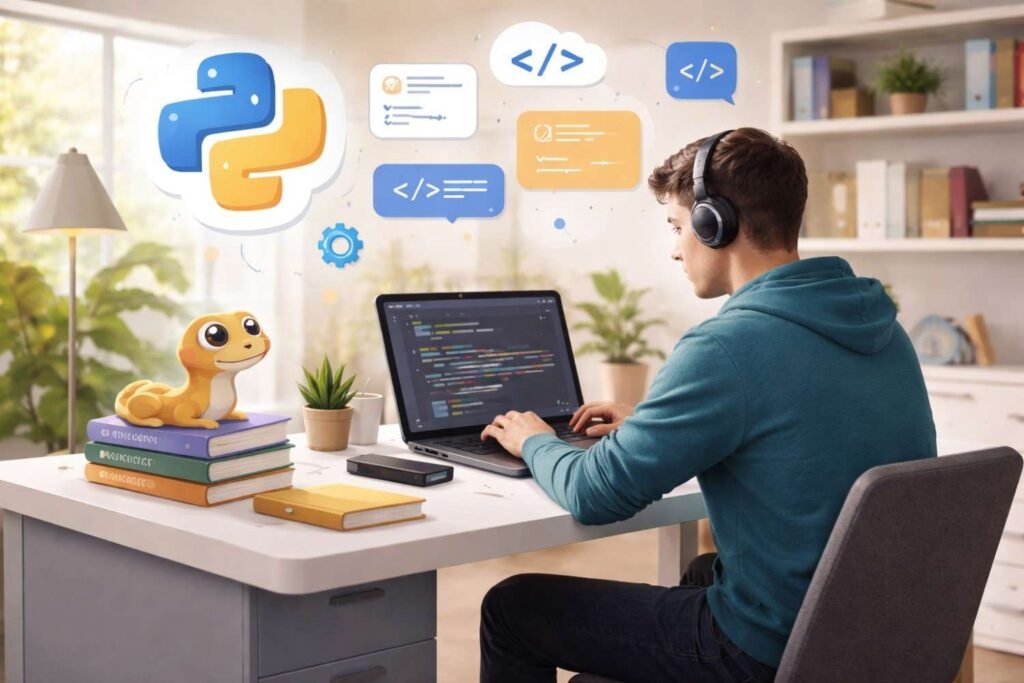
1. Set Clear Learning Goals
Before you start writing your first line of code, it’s important to know why you’re learning Python. Are you interested in web development, data science, or maybe automation? Setting clear goals helps you focus on the right resources and stay motivated.
2. Set Up Your Python Environment
To begin coding in Python, you need to set up your environment:
- Install Python: Download and install Python from the official website. The installation process is straightforward and beginner-friendly.
- Choose a Code Editor: You can start with the built-in IDLE, or choose an editor like Visual Studio Code, which is widely used by developers.
- Run Your First Python Program: Open your editor, write a simple Python program like print(“Hello, World!”), and run it. This small step is the foundation of your Python journey.
3. Learn the Fundamentals of Python
Once your environment is set up, focus on learning the basic concepts of Python:
- Variables and Data Types: Learn how to store and manipulate different types of data like strings, numbers, and lists.
- Control Flow: Master if statements and loops to control the flow of your program.
- Functions: Understand how to define and use functions to organize your code.
- Data Structures: Get comfortable working with lists, dictionaries, sets, and tuples to manage collections of data.
4. Practice Hands-On
Theory is important, but practical application is where the learning truly happens.
- Follow Tutorials: Code along with online tutorials, which are great for getting started.
- Solve Coding Challenges: Use platforms like HackerRank or LeetCode to work on coding exercises and improve your problem-solving skills.
- Read Documentation: Refer to the official Python documentation as your definitive source of information.
5. Build Projects

Once you’ve mastered the basics, start building simple projects to apply what you’ve learned. Projects help you solidify your knowledge and build your problem-solving skills.
- To-Do List: Build a basic to-do list app where you can add and remove tasks.
- Number Guessing Game: Create a game where the computer selects a random number, and the player has to guess it.
- Simple Calculator: Build a calculator that can perform basic arithmetic operations.
Building these small projects will make you more comfortable with Python and prepare you for more advanced challenges.
6. Join Python Communities
Learning to code can be challenging, but joining a community can help you stay motivated and get support when you encounter roadblocks. Here are a few communities where you can ask questions, share your progress, and learn from others:
- Reddit’s r/learnpython: A great place for beginners to ask questions and share resources.
- Stack Overflow: The go-to platform for solving coding issues and finding answers to common problems.
Being part of a community also keeps you accountable, which is crucial for consistent progress.
7. Expand Your Knowledge with Advanced Topics

Once you’re comfortable with the basics, it’s time to dive deeper into Python. Explore:
- Object-Oriented Programming (OOP): Learn how to structure your code using classes and objects.
- Python Libraries: Get familiar with popular libraries like pandas (for data manipulation), Flask (for web development), and Matplotlib (for data visualization).
- Error Handling and Debugging: Learn how to handle errors and debug your code effectively.
These topics will enhance your Python skills and open up new opportunities in advanced fields like web development and data science.
Frequently Asked Questions (FAQs)
1. How long does it take to learn Python?
The time it takes to learn Python depends on your previous experience and how much time you dedicate to learning. On average, if you dedicate a few hours each week, you can learn the basics in a few weeks and start building projects within a couple of months.
2. Do I need a computer science degree to learn Python?
No, you don’t need a degree to learn Python. Many successful Python developers are self-taught. The most important factors are dedication and practice.
3. What should I learn after mastering the basics?
Once you’re comfortable with the basics, explore more advanced topics such as web development (using Flask or Django), data science (using libraries like pandas and NumPy), or automation.
4. What resources are best for beginners?
Begin with the official Python documentation and online platforms like LearnPython.org and W3Schools. These resources offer structured learning paths that are ideal for beginners.
Conclusion
Learning Python is an exciting and rewarding journey. With its simple syntax and wide range of applications, Python is the perfect language for beginners who want to enter the world of programming. You’ll be well on your way to mastering Python and opening up new tech opportunities if you set clear goals, practice frequently, create genuine projects, and interact with the community.